

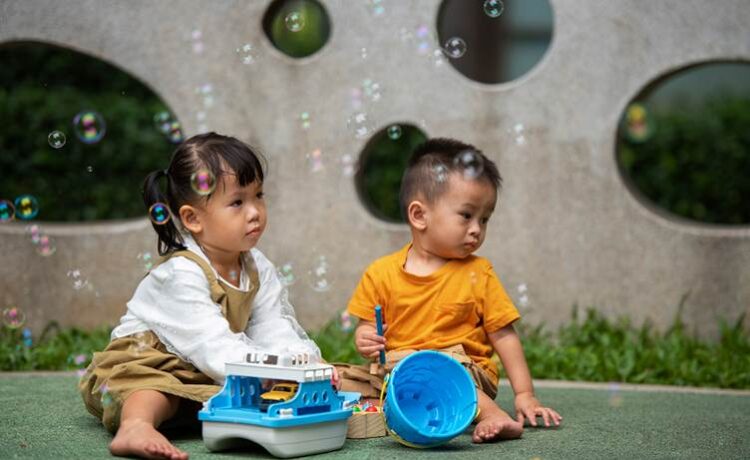

Choosing the right preschool shapes your child’s early development. Montessori playgroup in Singapore offers a structured yet flexible environment where young learners build independence, focus, and confidence. Parents seeking a private preschool in Singapore that nurtures real-world skills find this method aligned with their goals. Below are six benefits of this approach for young children.
1. Encouraging Independence through Practical Learning
A Montessori playgroup in Singapore cultivates independence through structured daily routines and self-directed activities. Teachers offer a prepared environment where children work with specific learning materials, selecting tasks that suit their development stage. Children learn to complete activities on their own, promoting self-discipline and focus.
Practical life exercises like pouring water, buttoning shirts, and cleaning up reinforce motor control while building autonomy. Completing these tasks helps children understand responsibility and accountability, essential traits for long-term personal growth. They gain confidence by mastering practical tasks rather than being assisted constantly.
Unlike traditional teacher-led classrooms, a Montessori setting allows children to take initiative. This learning method creates a sense of ownership, preparing them to manage expectations and decisions effectively. Early exposure to autonomy sets a solid foundation for future academic and behavioural success in primary school.
2. Strengthening Focus and Concentration
Montessori classrooms minimise distractions. Educators encourage sustained periods of concentration by allowing children to work uninterrupted for long stretches. The emphasis on one task at a time helps sharpen focus from an early age.
Children choose their work independently, engaging in purposeful activity. Repetitive use of learning materials reinforces patterns and routines, training the brain to manage tasks with clarity and purpose. Rather than switching constantly between subjects or tools, children focus deeply on completing one task before moving on.
In a typical private preschool in Singapore, distractions from group instructions or unstructured play often reduce focus. In contrast, the Montessori approach reinforces self-control through repetition and consistency. This framework supports long-term memory, pattern recognition, and higher-level cognitive engagement.
3. Developing Early Problem Solving Skills
Montessori materials are self-correcting. They guide learners to find mistakes and fix them without teacher intervention. This structure trains young minds to think critically and analytically, laying the groundwork for problem-solving skills for preschoolers.
Activities involving shapes, puzzles, and logical patterns challenge children to evaluate outcomes and identify solutions. Teachers refrain from giving direct answers, encouraging learners to persist and think through each challenge. Children build resilience and adaptability, learning to adjust approaches until they achieve their goals.
These experiences promote strategic thinking, patience, and decision-making. As children practise handling complex situations on their own, they form the cognitive habits necessary to thrive in future academic environments. Mastering these skills early improves outcomes in subjects requiring logic, sequencing, and spatial reasoning.
4. Fostering Social and Emotional Skills
A Montessori playgroup in Singapore supports cooperative learning without forced group participation. Children engage socially at their own pace, choosing to work alone, in pairs, or in small groups. This fluid environment builds empathy, sharing, and mutual respect without pressure.
Teachers model respectful communication and peaceful conflict resolution. As children observe and practise these behaviours, they gain emotional maturity. Activities such as turn-taking and role-playing teach them how to handle disagreement calmly and respectfully.
This approach avoids overstimulation common in louder or less structured preschool settings. Learners feel safe, understood, and respected. They respond by mirroring these values, leading to stable relationships and better emotional regulation. Children carry these social strengths into primary school, where cooperation and empathy become increasingly relevant.
5. Building Language and Early Literacy
Montessori playgroups use phonetic materials to strengthen language development. Learners start by identifying sounds before progressing to reading and writing. The multi-sensory approach ensures children recognise letters through touch, movement, and sound.
Language development is not limited to reading. Teachers engage children in rich conversations using descriptive vocabulary, encouraging expression and comprehension. Storytelling, poetry, and object-based lessons expose learners to sentence structure, verb usage, and articulation.
This environment helps children develop strong communication skills. They learn how to construct sentences, ask questions, and share ideas with clarity. These competencies provide an advantage once they transition to formal schooling, where structured communication becomes essential for classroom engagement.
6. Nurturing a Love for Learning
Montessori educators respect each child’s pace. There is no competition, ranking, or pressure to meet external benchmarks. Learners progress naturally, gaining satisfaction from mastering tasks for their own sake rather than for approval or rewards.
This learning culture sparks curiosity. Materials are designed to be engaging and self-explanatory, allowing children to discover new concepts independently. Teachers observe and guide rather than instruct, ensuring learners explore subjects in depth.
Enrolment in a Montessori playgroup in Singapore exposes children to diverse topics in science, culture, mathematics, and geography without overwhelming them. Early success in these areas fuels a positive attitude toward school and academic tasks, reducing resistance and enhancing lifelong motivation.
Conclusion
Montessori playgroups offer a strong foundation for lifelong learning by encouraging autonomy, focus, critical thinking, social maturity, communication skills, and internal motivation. These benefits reflect the strength of the Montessori method in nurturing whole-child development within a structured private preschool in Singapore.
Schedule a visit at Brighton Montessori to learn how a private preschool in Singapore can offer your child a Montessori playgroup experience that supports real growth and practical learning.